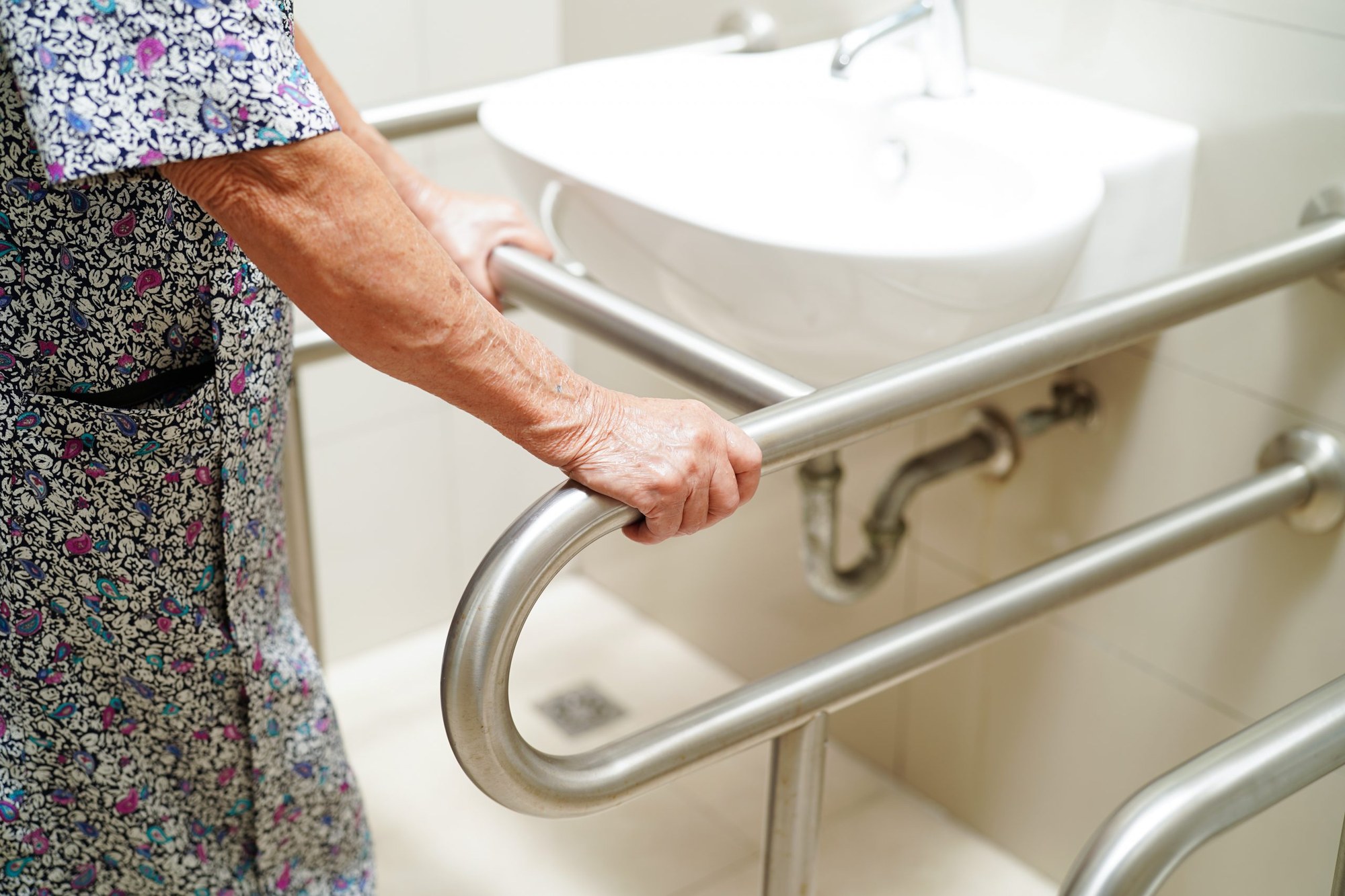
Minor Home Modifications
Rails, ramps and bathroom changes planned around how you use your home, by an occupational therapist who comes to you.
Firm Foundation OT is a mobile occupational therapy practice that assesses homes for minor home modifications, such as grab rails, ramps and bathroom changes. We visit you at home across Frankston and the Mornington Peninsula, look at how you manage your daily routines, and recommend practical changes. We support NDIS participants and private clients of all ages.
Last updated
Minor home modifications are practical changes to the home itself, rather than equipment you bring into it. The aim is to remove an everyday barrier, such as a step that has become hard to manage or a shower that no longer feels safe, so you can get around and look after yourself at home with more confidence.
In NDIS terms, a minor home modification is one that is straightforward and does not affect the structure of your home. Some changes sit close to that line. Removing a shower hob or widening a doorway can be simple in one house and structural in the next, depending on the walls, plumbing and floor levels. Part of our job is to flag when a change may be structural, so it can be checked with a builder before any work is planned.
Examples of the changes we look at include:
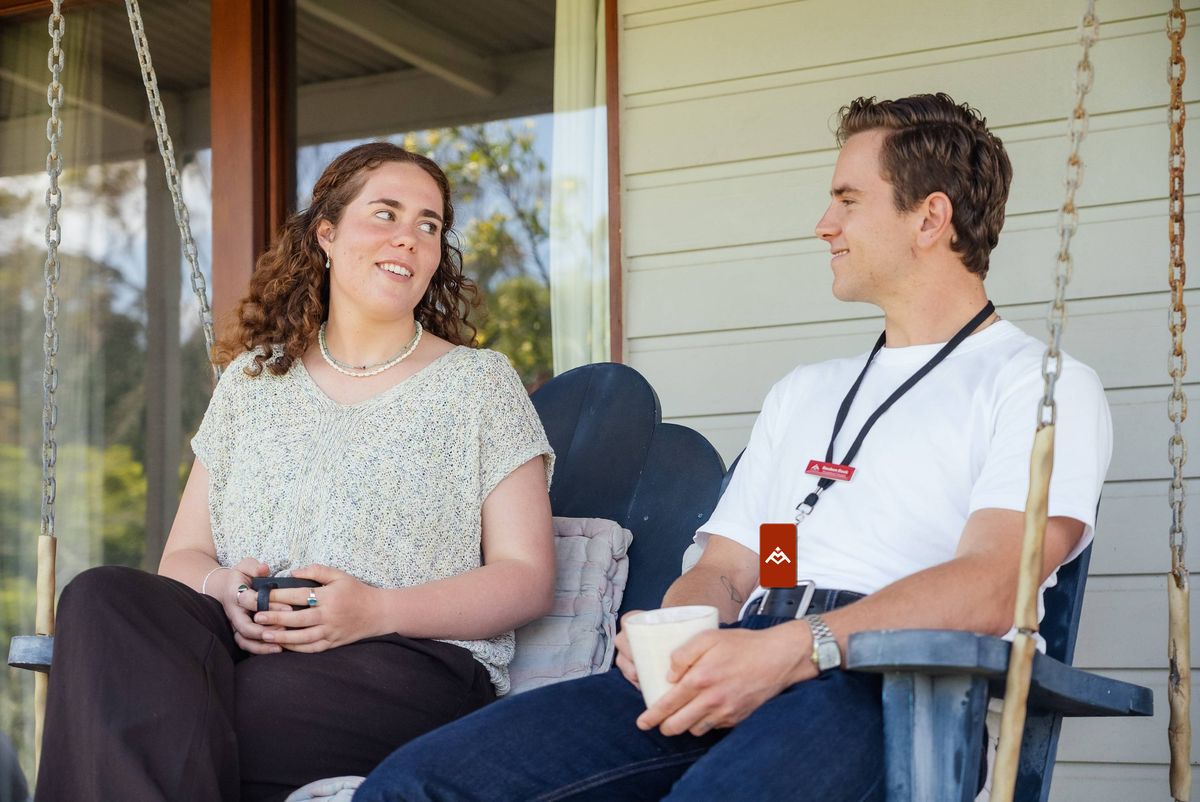
A rail or ramp only helps if it suits the way you actually move through your home. An AHPRA registered occupational therapist visits you, works through the parts of the day that are hard right now, and then looks closely at the space to understand why. The process usually follows these steps:
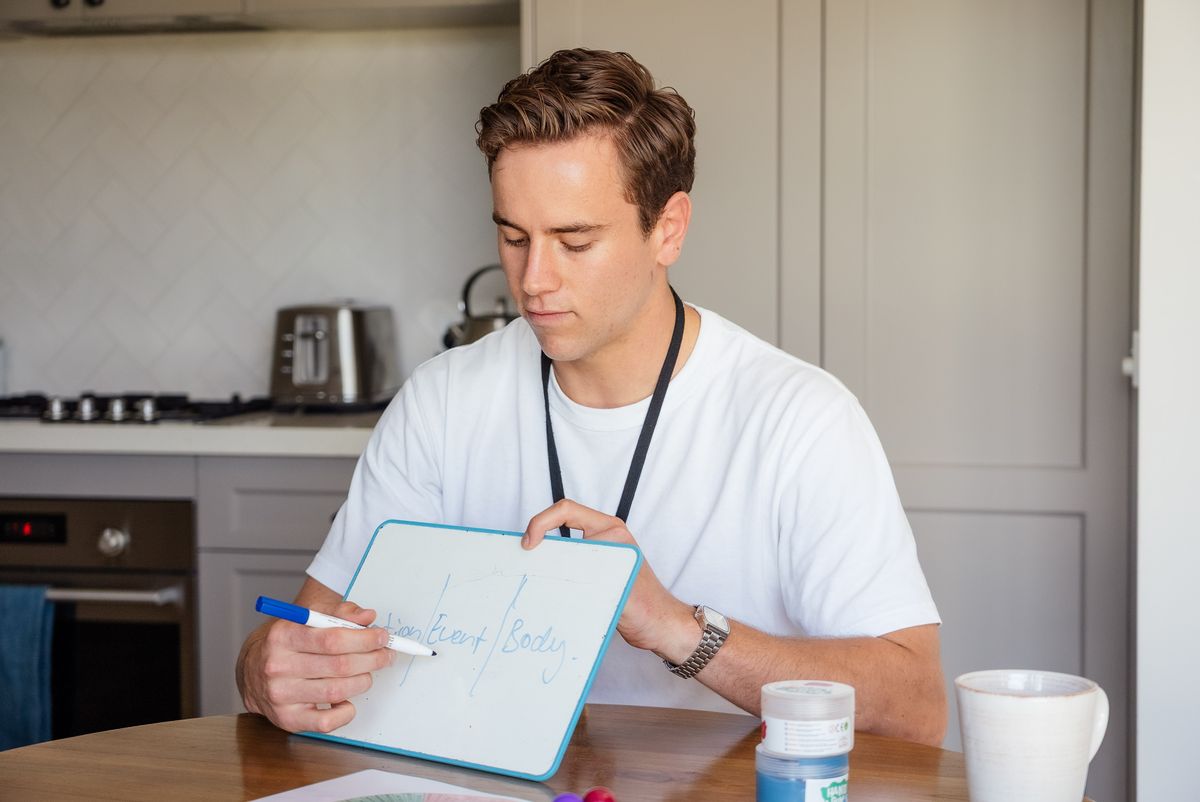
Home modifications are for anyone whose home has become harder to use because of disability, injury, illness, or changes in mobility, balance, strength or vision. We work with people of all ages and all abilities, from early childhood through to adults, including older adults who are finding parts of the home harder to manage.
For a child, the focus might be a safe way in and out of the bath, or rails that support more independence in the bathroom as they grow. Our children's occupational therapy page covers how we work with families more broadly. For adults, it is often about getting in and out of the house, showering more safely or with less help, or moving between rooms at night.
If the bigger question is where and how you live, rather than one room or one step, a Home and Living Assessment looks at your support needs across your whole living situation. You do not need to be an NDIS participant to have your home assessed.
Because the space itself needs to be seen and measured, this work happens in person at your home. We visit homes across Frankston and the Mornington Peninsula, including Frankston, Mornington, Langwarrin, Mount Eliza, Somerville and Hastings. See all the areas we serve.
Functional Capacity Assessments, sensory profiles, home and living, executive function, and the NDIS reports that support your plan.
Learn more
Ongoing, goal-based therapy that works on skills and everyday routines in the places you live, learn and work.
Learn more
The right equipment matched to your goals, from everyday aids to mobility and seating.
Learn more
Yes, it can, when the change relates to your disability and meets the NDIS criteria for NDIS supports, including being reasonable and necessary. Whether a change is funded is the NDIA's decision, so we cannot promise an outcome.
The NDIS sorts changes to the home into three levels. Simple home adaptions are small, low-cost changes that make a home safer and easier to move around, and are usually funded as low-cost assistive technology. Minor home modifications, the focus of this page, sit in the middle. Complex home modifications affect the structure of the home or need custom or more technical work, often involve several areas of the home, and need approvals and certificates of completion. Complex work also needs a building construction practitioner and two itemised quotes. The NDIS explains each level on its modifying your home pages.
For minor and complex modifications, the NDIS asks for an assessment by a home modification assessor. That is an AHPRA registered occupational therapist who has also completed postgraduate education or training in home modifications. If you plan to use NDIS funding, we will tell you at the start whether we can complete that assessment for you or whether you will need a home modification assessor, and explain what the NDIS asks for next. Either way, we can look at how you use your home and advise on simple changes such as rails and lever taps.
The NDIS may include funding in your capacity building supports to explore what changes you need and to pay for the assessment. It will not fund modifications that do not follow Australian standards. Our fees are charged in line with the NDIS price limits and set out in a service agreement before anything begins. We work with participants whose plans are self-managed or plan-managed, as well as private clients. We're not a registered NDIS provider, so we can't claim from NDIA-managed (agency-managed) plans. If your plan is NDIA-managed, talk to us or your support coordinator about your options.
The difference comes down to whether the change becomes part of the house or is something you could pick up and take with you. Home modifications change the structure, fixtures or fittings of the home. Assistive technology is equipment, such as a freestanding shower chair, a walking frame or a transfer bench, that you place in the home and can move.
The NDIS gives a simple example: a non-slip mat is assistive technology, while a non-slip floor treatment applied to the floor is a home modification. In the same way, a portable ramp you set down at the back door is equipment, while a ramp built onto the entry is a modification. Some items sit on the line. A single grab rail is attached to the wall, but the NDIS often funds small changes like this as low-cost assistive technology.
The NDIS treats them as different supports with different evidence, so it helps to know which one you are asking for. In practice we often look at both together, because a workable answer can be a mix of the two, such as a step-free shower used with a shower commode, or a non-slip floor treatment alongside a shower chair.
Not always. The NDIS calls low-cost changes that make a home safer simple home adaptions, and usually funds them as low-cost assistive technology, so a single grab rail may not need a home modification assessment. For minor and complex modifications, the NDIS asks for a home modification assessor, an AHPRA registered OT with postgraduate training in home modifications.
If you rent, the owner usually needs to agree before any change is made. The NDIS can only fund modifications to a home you own or one whose owner agrees, and it asks for written approval from your landlord. Raising it with your landlord or agent early helps.
It varies, so we cannot give a set timeframe. The usual steps are the assessment visit, the recommendations, the NDIA's funding decision if you are using your plan, landlord approval if you rent, and then the tradesperson's booking. Each step has its own timing, and we explain them at the start.
A qualified builder or tradesperson does the installation. Our part is the occupational therapy: assessing your needs and your home, and recommending and specifying the change in enough detail for the tradesperson to quote and install. The NDIS only pays for work by tradespeople qualified for that type of work.